
2017 – Investigation
Our story with honey bees started ironically, in our backyard. Our gardens and yard have always been important to us and the location of a lot of family time on the weekends. My wife and I had always worked hard to have a great lawn and landscaping around our home but in 2017 I began noticing that we weren’t seeing many honey bees or foragers even though we planted for pollinators. Growing up with clover everywhere and as a kid running around with bare feet it was hard not to step on a honey bee. So, the almost complete absence of them in our garden was shocking. Where were they? I began talking about this frequently with my neighbors and they shared having the same experience. This is what started our interest in honey bees, investigating the treatments that kept our lawns and gardens weed and bug free, and eventually into beekeeping. Today, our yard is not always voted best on the block, but our pollinators are back and our soils and plants are healthier. Win-win in my book.
During our investigations and frankly fumbling around in the dark trying to learn we attended local beekeeping clubs, took beginner beekeeper classes, looked at hive equipment and read and read and read. At first, we thought we should do what everyone else told us to do…get a Langstroth hive and put a purchased package of bees in it. That seemed simple enough but then came all the “you have to do”. You must treat, you must feed, you must order your bees early or you won’t get any, you must use patties and quilt boxes, and…, and…, etc. It seemed you needed to do more to just try to keep your bees alive than seemed reasonable for a hobby. Wasn’t this a hobby? Isn’t this supposed to be fun? Don’t the bees who now frequent my garden know how to take care of themselves?
We quickly realized that we wanted to care for bees in the same way we were caring for our yard where we had started following a management style that allowed the yard to be restored to a natural self-sustaining balance without the need for feeding, treatments and pest control. A yard that isn’t perfect, but it is a yard that is alive and healthy, I know that moles think so:-). So, we began looking into natural and sustainable beekeeping practices as well as a hive style that would more closely mimic a natural honey bee home, a tree cavity.
It didn’t take many club meetings, discussions, or books to see this wasn’t mainstream and was generally discouraged by experienced beekeepers who we were looking to for guidance. This didn’t dissuade us and we soldiered on eventually finding examples of successful natural beekeeping and a hive style that promised a better environment for the bees, the Layens horizontal hive. Now all we needed were bees…what to do? Since we wanted honey bees as healthy as possible and local it seemed the obvious thing to do was hang a swarm trap.
2018 – First Attempt
Deciding we wouldn’t buy bees, I built a 20-frame insulated Layens hive, frames and a swarm trap early that spring. Late March I hung the trap on an old tree in our front yard. Why I thought that was a good location, who knows. Sadly, it didn’t pay off that first spring. Even though we could have purchased bees we decided to stick to our guns and wait another year.
2019 – Success
In the spring of 2019, we hung the trap again in the same tree and another in the backyard. Given we had one in the front of the house I would check it each day when I went to work and again when I came home. And one day to my surprise what did I see, bees flying around it and one or two going in. It was like winning the lottery. So exciting! That spring we actually collected two swarms which started our backyard apiary. What an exciting year. We had a lot to learn about beekeeping, and we had a lot to learn about this very uncommon hive style that our local bee inspector referred to as a “coffin” style because of its size and shape.
It turned out that using a Layens hive was very easy both for us and the bees. Management was simple and inspections even easier on us given you’re just working with one frame at a time…no lifting, yeah! But you know there is always a but, we still had to earn our stripes through a few hard knocks. Yes, no matter what hive style or management approach you use you still need to put your time in with the bees and let them teach you a few things about what they like and what they don’t, how to use your equipment, seasons and what to watch for, and many things not to do. Sadly, we didn’t have anyone to mentor us given our management approach and hive style, but I can tell you it was always an exciting experience each time we got into the bees. They are amazing creatures. So much so that we even set up a table so we could sit each evening and talk about the day while watching our hives. There is so much you can learn by just sitting near your hives.
2021 – Wild Hives is launched
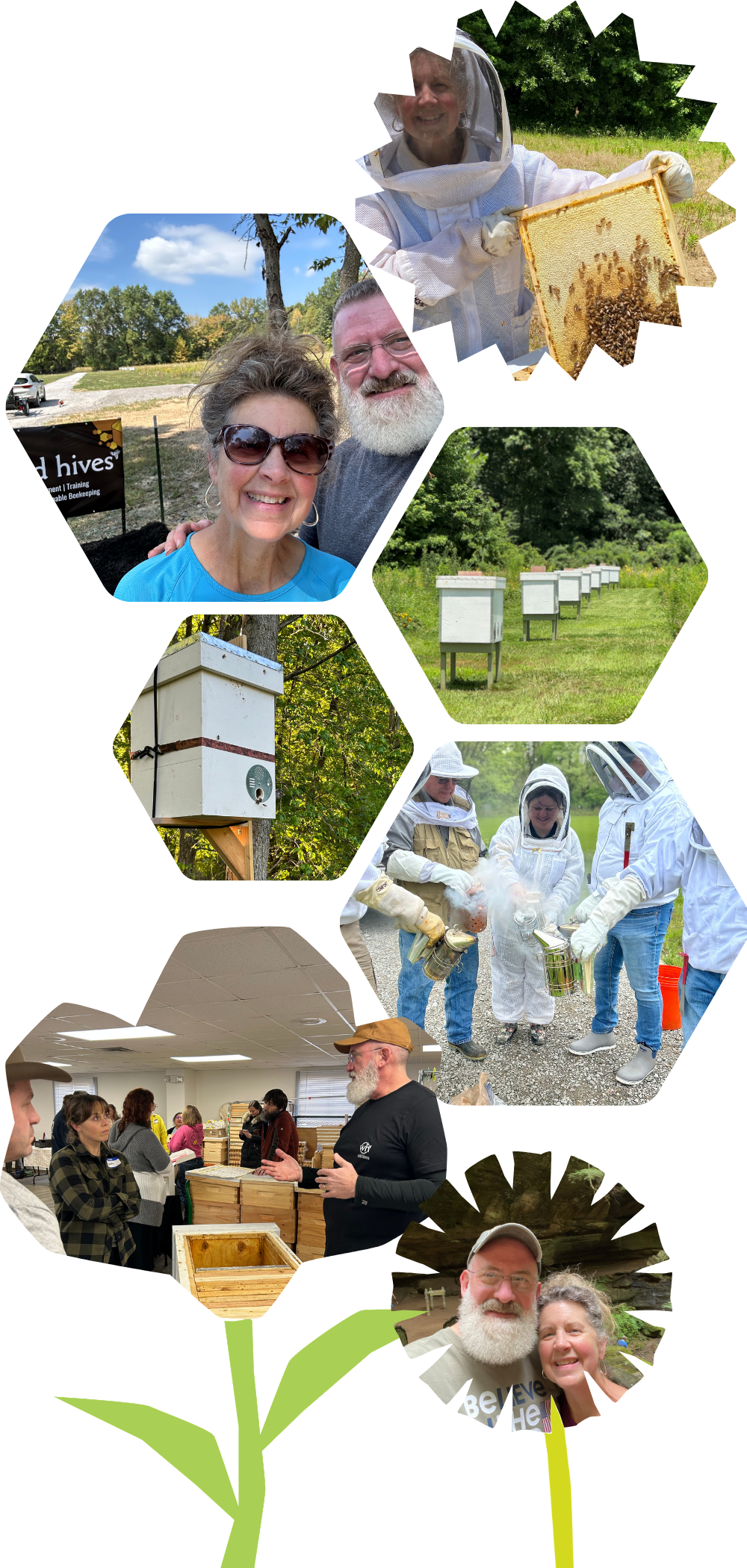
Through swarm trapping and artificial splitting, we had 17 colonies in our backyard that summer. During one of those particular beautiful warm sunny days, I was inspecting my hives and after going through 4-5 looked up and noticed all the bees I had kicked up into the air. These weren’t swarms but the air was full of bees over my backyard. I walked to my fence line and saw what my neighbors must be able to see…way too many bees in our backyard. Sufficient to say, our hives worked out so well that it wasn’t long before we were hooked and wanted to share what we’d learned with others. That was the start of Wild Hives and our decision to get some land to put all these hives on.
2022 – Land
We spent the fall of 2021 looking for land and realized that many people had done the same thing in 2020 during COVID. Yes, land prices were at a premium but after a few months of hunting we found a wonderful 12 acre lot. Now came the hard part. It was a very wet spring, and we had 17 full Layens hives to move from our house 40 mins to our new property that was at that time 12 acres of muddy farm fields. Yes, it was hard and required many trips by my wife and I with a hand pulled cart to pull the hives into place. That February we also were able to get 12 acres of pollinator plant seed and yes, again we used push spreaders to spread it across all our land. I can still hear the mud sucking sound of tromping across the fields.
Since then, we have worked hard to expand our no-treat/no-feed colonies and our business providing classes, mentoring, equipment sales, honey, and bees to those interested in a more natural and sustainable way of keeping honey bees. If you find our story interesting and want to learn more, please contact us. We have a heart for those just starting out and want to help your beekeeping journey be as successful and enjoyable as possible.
Have questions or need help choosing the right products? Fill out the form or give us a call and we’ll get back to you quickly!
513-444-7819
wildhivesllc@gmail.com