
Wild Hives is excited to bring to our Layens community another year of winter colony survey results. The main reason this can happen is because of those who submitted data and we want to thank everyone who participated. Our hope is that our community will find this information helpful and interesting encouraging more Layens beekeepers to participate in the future.
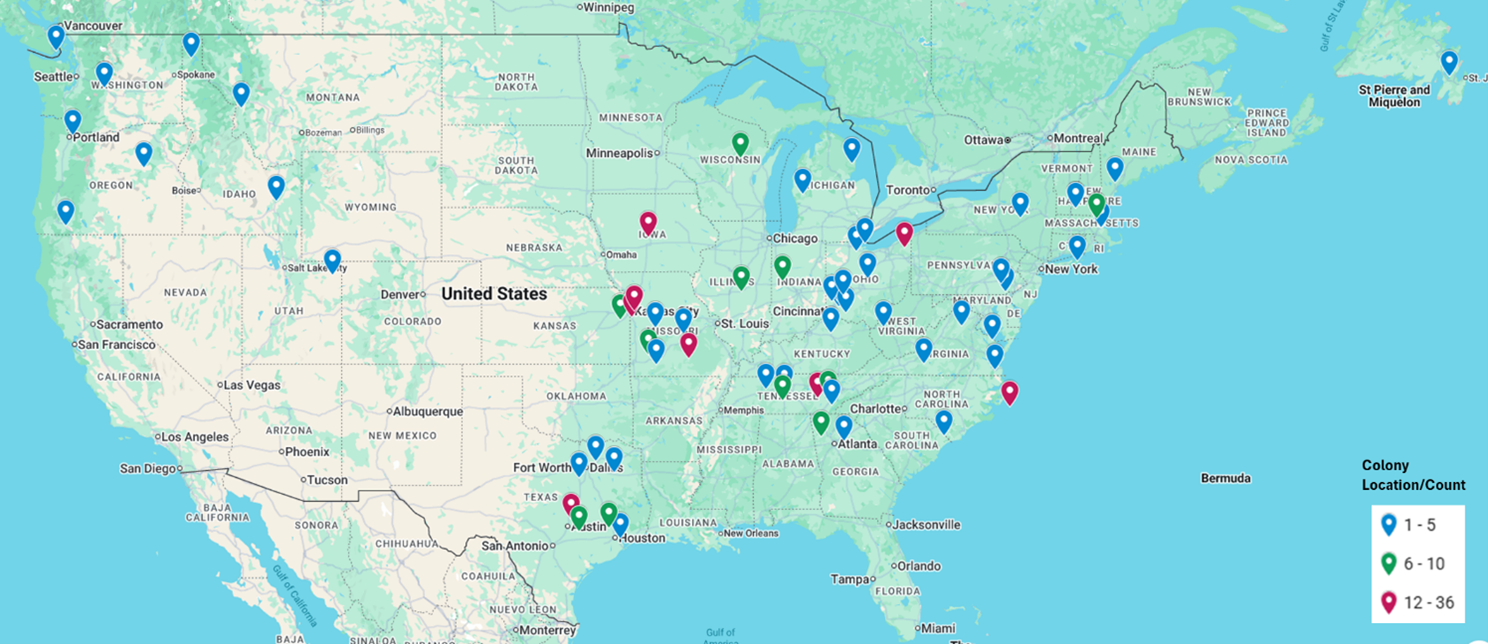
This year’s survey data represents 66 respondents across 26 US states and 2 Canadian territories providing data for 357 colonies that went into the 2025-2026 winter.
Layens Beekeepers
2025-2026 saw a similar number of beekeepers and colony counts represented in this year’s survey data as we saw in 2024-2025. As a Layens hive community we certainly understand that we represent only a small portion of the total US beekeepers, but we are seeing a few additional states pop up on the map which is great news and showing a growing interest in the hive style. From the Midwest to the East Coast there is a good number of Layens beekeepers spread across different geographic and weather conditions which helps the community see our hives work and perform well no matter where your apiary is.
Given most of the US 2025-2026 colony loss data is not yet publicly available we’re not able to compare our results but it’s reasonable to expect that US losses will fall back into the average 40-50% 10-year loss range prior to last year’s significant 62% that drove many out of the business. Let’s hope things improve.
92% of the submissions identified themselves as hobbyists with only 5 self-identified as sideliners. This gives us a healthy set of data regarding hobbyists helping our community better understand how this group of Layens beekeepers is working and managing their bees.
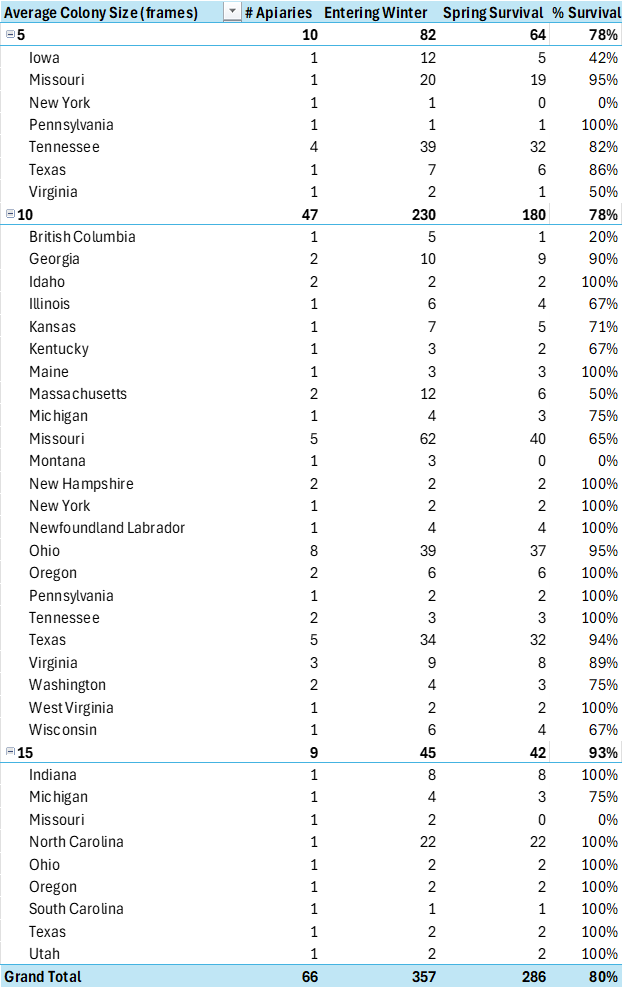
An interesting take away is that there was a very small difference in survival rate between hobbyists and sideliners once colony sizes reached a midrange healthy frame count. Overall hobbyists had an average 80% survival rate while sideliners had an 82% rate.
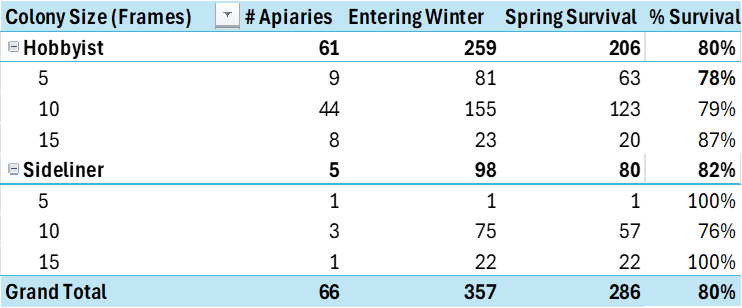
At a healthy 10 frame count or larger they both averaged in the high 70s with only one outlier. A couple of factors may be in play here. One could be the simple answer that the hobbyists are gaining in experience as their colony/apiary health and size grows or vice-versa creating a symbiotic relationship between the acquisition of knowledge and the frequency of its application. Another factor could be that a Layens hive performs better when it contains a larger colony, but we have to remember that there are a good number of hobbyists going into winter with 5 frames without significant increases in losses. This could again point to the benefits (or ease) of using a Layens hive over other styles. Lastly, our community tends to lean toward not feeding or treating and swarm capturing as the source of our bees. All three of these behavioral factors may also contribute to stronger survival rates.
Survival/Losses
Last year Layens’ beekeepers reported 26% losses on average which didn’t come near to the commercial industry’s average of 62% losses. This year Layens beekeepers continue to report even lower loss rates averaging 20%.
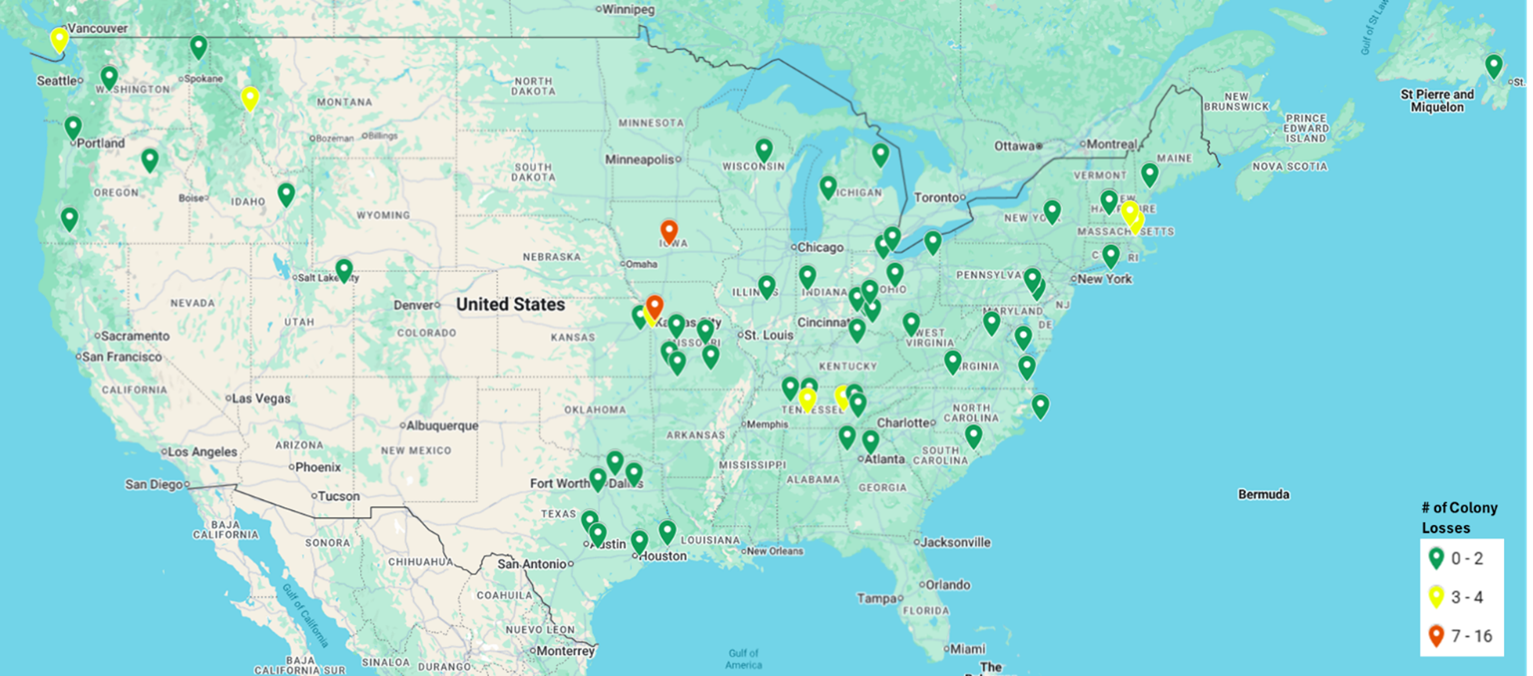
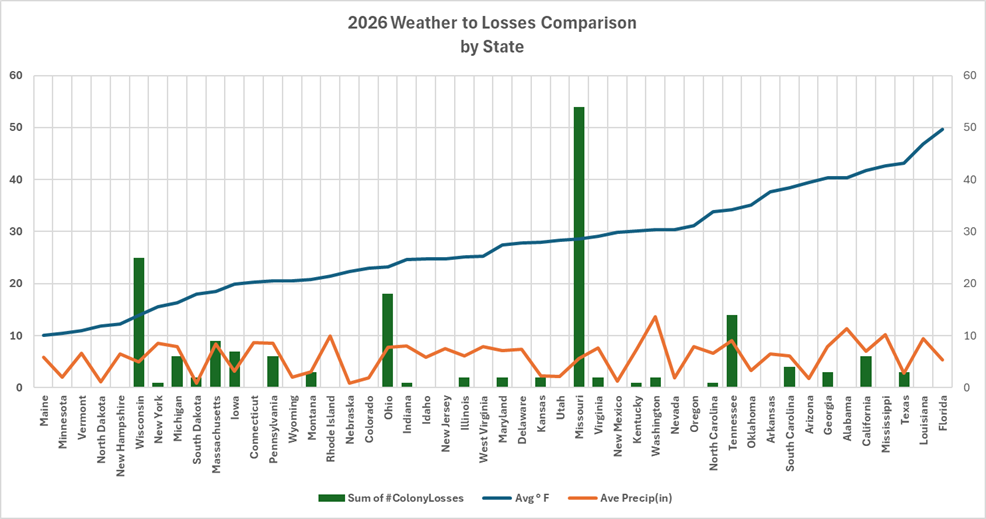
As you can see below the percentage of loss by state is strongly driven by the base number of colonies in that state. So, for instance more colonies and more losses in a state might still calculate to a low loss rate while a state with only a couple colonies that were all lost would calculate to a high loss rate. What we need to look for are high counts and loss rates above our community’s average of 20% to identify clear variations. Missouri, at 84 colonies going into the winter and a 30% loss rate certainly falls into an area that should be considered. First, I might suggest the extreme weather pattern that swept across the US with its weeks of extreme cold may have played a large part in the results. Other things such as insulation material and hive/lid construction/setup could also be contributing factors in particular locations in the US. It may help our community to consider future insulation/construction needs if these weather patterns continue instead of following a dogmatic single design. If your area needs more or less insulation or different construction techniques, then your local Layens hive designs should reflect that need. This is not suggesting that the basic Layens hive style should be questioned but that materials, thickness, and thermodynamic requirements should always be a local solution in support of providing the best hive for your bees.
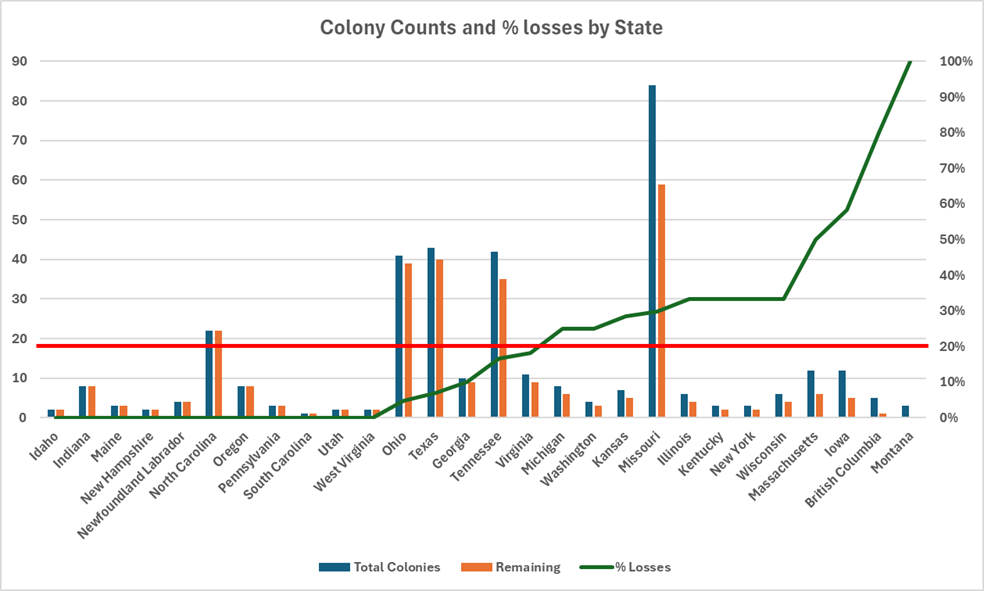
Other possible reasons for loss will be discussed below. It’s clear from nature though that chasing after 100% survival is not consistently possible nor should it be. Everything has a lifespan and age certainly could be a contributing factor in some losses. Dr Seeley has mentioned in his past writings that close to 50% of natural swarms likely don’t make it through their first winter. So, I wonder if trying to get to 0% colony loss is really the goal for those of us collecting swarms and following a natural approach to beekeeping. Beekeeping is a hobby full of interesting topics. It should be fun and maybe we need to recognize that and give ourselves a little room…wild colonies certainly do.
Colony Size and Condition
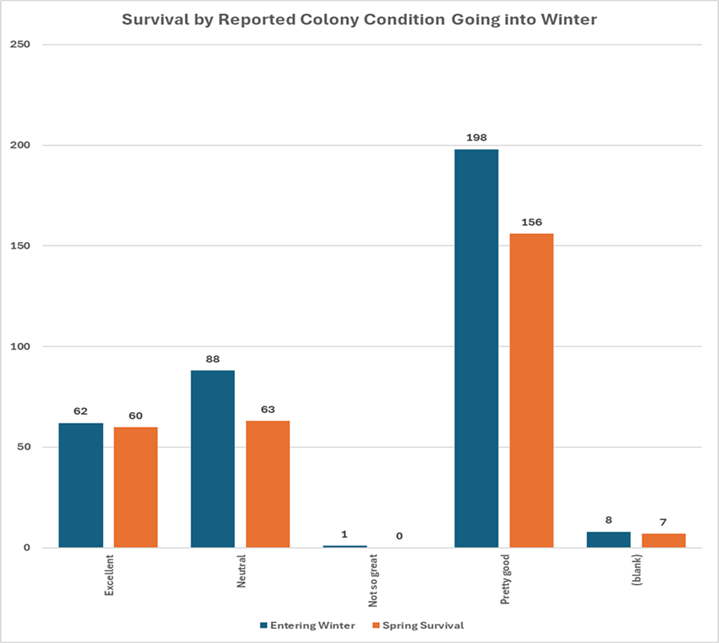
It shouldn’t be a surprise to any beekeeper that healthier and larger colonies, given the proper amount of food and a hive that is appropriate for their location will do well. Those colonies reported to be “excellent” (3% losses) or “pretty good” (21% losses) certainly proved this out with “neutral” reaching 28% losses and “not so good” 100%. It was interesting and maybe just a sign of humble beekeepers that only 17% of the colonies were reported as “excellent”. Those reported as “pretty good” certainly represented over half of all colonies but given the 18% survival rate difference between “excellent” and “pretty good” it is certainly something for us all to strive to build what we would consider “excellent” colonies.
Survival improved with colony size going into winter as mentioned earlier. Those reporting 15 or more frames as an average had a 93% survival rate where those running smaller colonies though doing better than the industry only had an average of ~78%. It would indicate that colony size really does matter as long as the colony is also healthy and well fed. This also raises a topic that we often shy away from and that is the question of culling weak colonies in the fall to repurpose resources and combine. Lots of opinions and arguments here but I wonder if a wild colony wouldn’t choose the same thing if ever given the ability to do so. I might even suggest that they do have this ability and we call it robbing. Weak colonies are robbed out every fall whether we notice or find it out in the spring. Something to consider.
Treatments/Feeding Data
What continues to be a consistent finding for the Layens community is that treated colonies are not increasing survival rate. Treating and feeding are certainly a personal decision for each beekeeper. The bees are theirs and they can choose their own management processes. Those treating had a 71% survival rate while those not treating had an 82% survival rate. Those colonies not treated represented 77% of all colonies going into the winter. The question here seems to be, does the cost, effort and timing of treatments really move the needle. Maybe it does for your bees and your location. It’s also possible that our community with its 5 years or more of collecting swarms is catching up with what the wild colonies have already achieved…natural Varroa and viral resistance…and that is why our survival numbers are improving beyond any treatment. Something to consider.
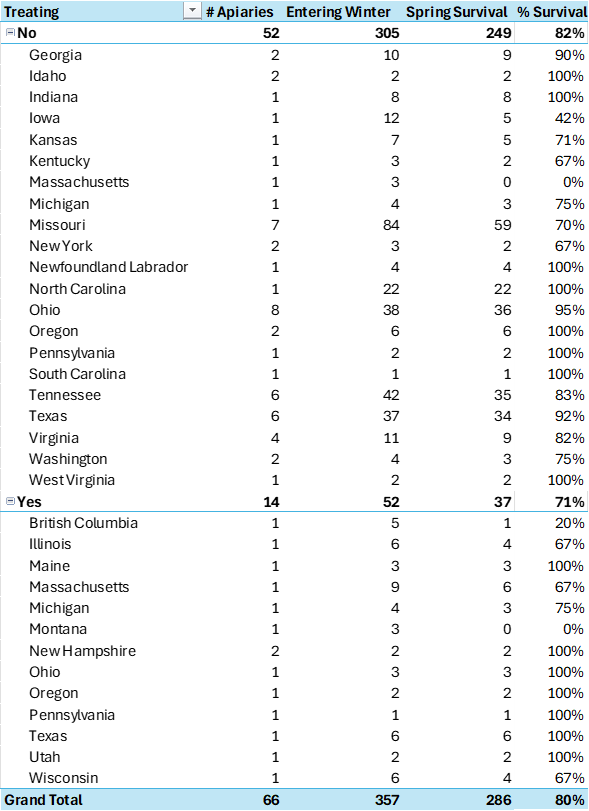
As was the case from the last report Oxalic Acid (OA) seems to be the product of choice for those who treat with some mention of VarroxSan and Norroa. What is interesting is that when treating, OA was used most often but had the least effect in regards to survival with only 64% success. There is a lot of information out there saying Varroa mites do not show resistance to OA so more investigation will need to be done to better understand this stat.
It would be good to consider if the result could be impacted by the mechanical process such as differences in rate, amount, method, or the level of expansion of the product inside the hive. Some recent studies have indicated this and even pointed toward the beekeeper’s adherence to application instructions as a possible reason for Varroa resistance growing in relations to certain products. The study indicated negative results in both cases of under and over treatments suggesting an increasing difficulty in simply applying treatments properly at the right times, temperatures and amounts.
A recent video done by a sideliner showed how OA gas expanses inside a double deep Langstroth box full of frames but not bees. Using plexiglass, the viewers could easily see that the gas was not filling the whole cavity. This could be a situation of pressure build up as the gas tries to expand in the box or difficulty of the gas to get around and up through the frames. I would suggest that expansion would even be more difficult if the hive was full of bees filling the space between frames. More needs to be investigated regarding the success of all mechanical application methods and not just a clinical or perfect test of the treatment.
As a percentage of the whole those not treating showed good survival rate of 82% slightly up from the overall average…I will certainly take that. Those that did treat tended to apply their treatments in August and then again later in the fall with a final treatment in Nov/Dec.
If you are interested in moving away from treatments and splitting from those colonies showing successful Varroa resistance/viral tolerance you might want to investigate recent presentations from Steve Riley and Professor Stephan Martin at this past year’s National Honey Show in the UK which you can access for free on YouTube. They provide simple methods easy for backyard hobbyists to use to identify Varroa resistance characteristics and explained how their UK clubs and beekeepers are seeing significant success in just a few years without difficult testing methods that are often costly and difficult for a hobbyist to complete properly.
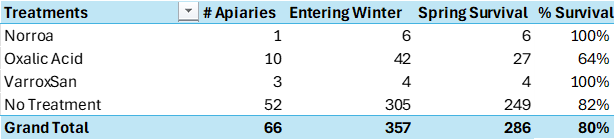
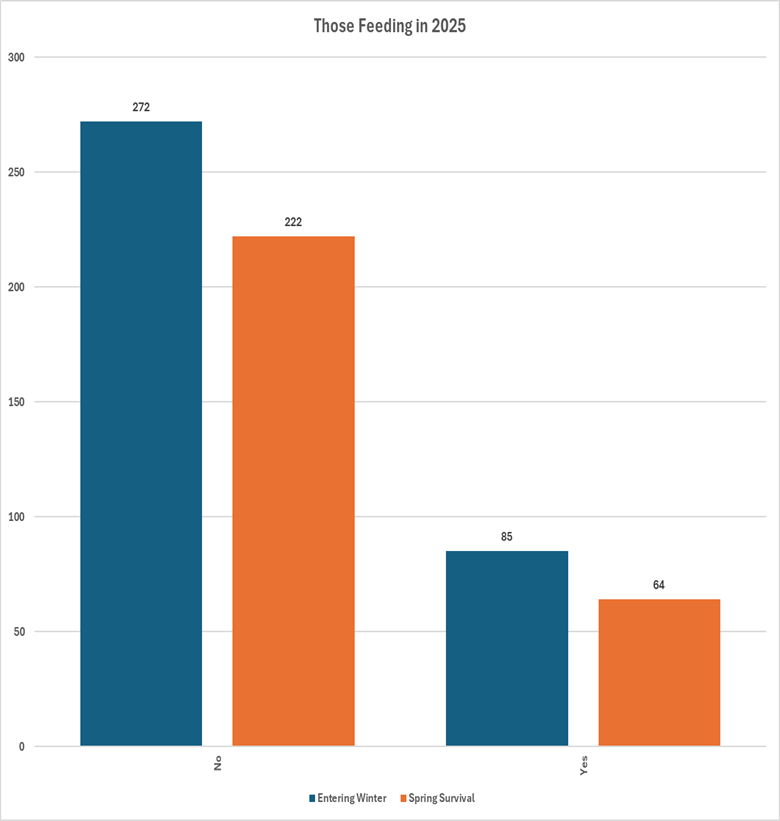
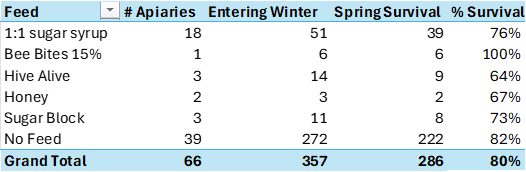
In regards to feeding, we again see a similar data trend as previously reported. Data showed that 82% of the colonies that were not fed last year survived while 75% of those who were fed survived. As with treating, the data does not indicate a significant benefit of feeding.
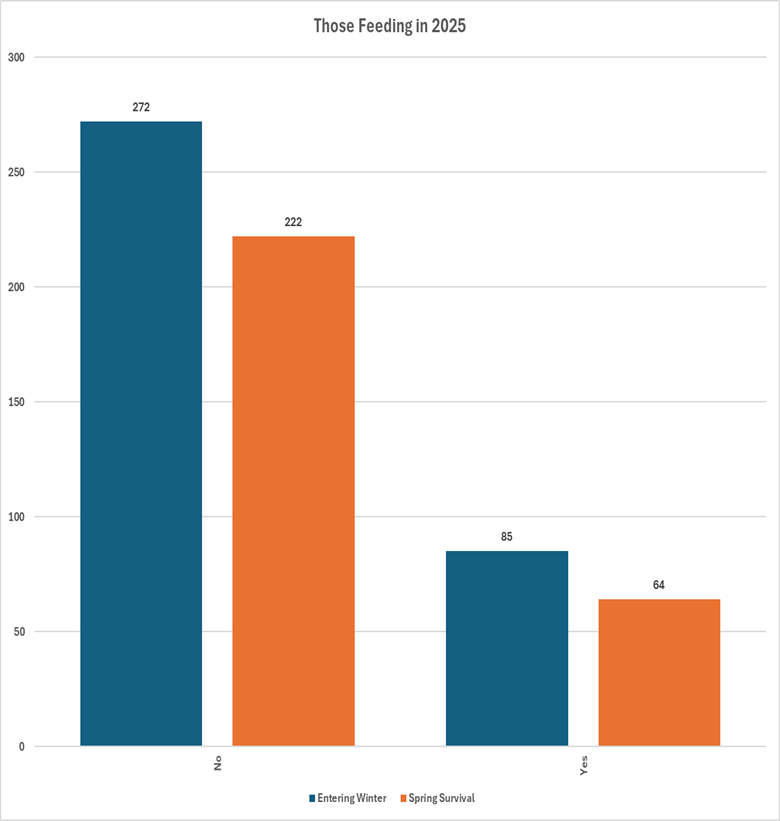
Now the beekeeper’s approach toward extracting fall honey and how much is left on the hive is likely a significant detail to consider. Feeding or not feeding may really be an issue of the beekeepers’ management style and winter preparations more than it is about whether feeding is a successful overall solution. Given studies in thermodynamics have shown that some amount of honey acts as a heat sink which releases heat slowly back to the colony leaving more during your winter preparations could be a great way to protect the colony from increased consumption because of winter weather changes and be a small addition to your overall insulation solution. It also may be the case that early spring or late winter feeding has become so common because of thin-walled hives and lean winter honey stores that it’s now just part of many beekeepers’ management style. Something to consider.
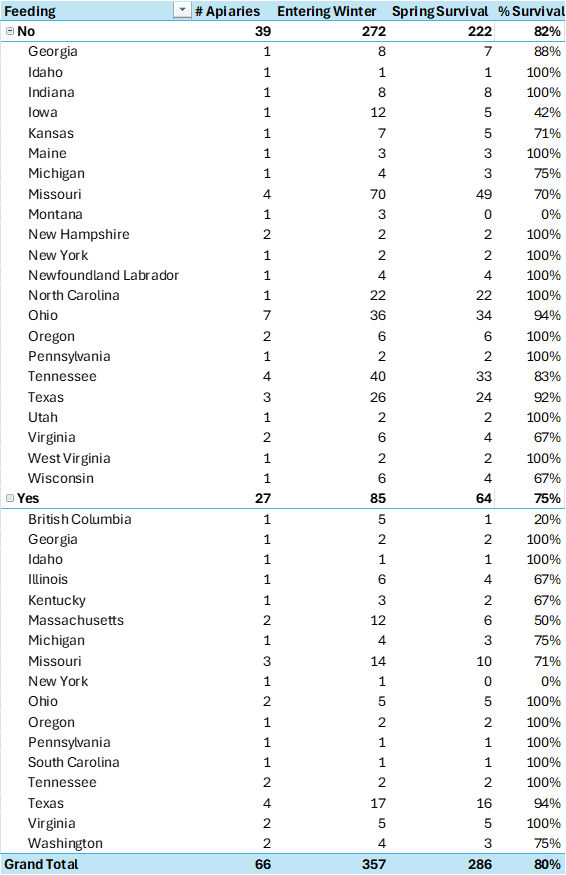
The majority of those that feed use a simple Sugar Syrup mixture of some ratio and minimal if any additives. Winter solutions such as sugar blocks were sometimes used.
Hive Design
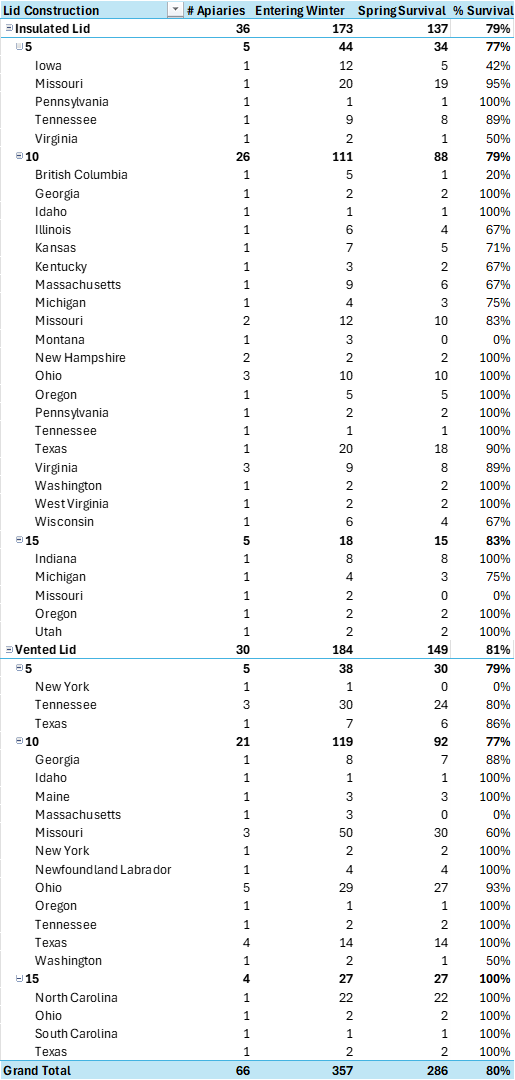
Insulation added or included in the hive lids during winter was generally done by every beekeeper. It was mixed regarding those using fully insulated lids verses a vented lid design. This may be because of the longevity of Layens hives and that the vented lid design was first shared in the US and/or that vented lid winterization generally includes removable insulation such as wool pillows on top of the headrails. Given the expansion of those using Layens hives into more southernly states there also may not be a perceived need for additional insulation even though insulation, as within our own homes, assists our HVAC systems (bees) to better manage both cold and heat. Considering what the bees do in tree cavities in the winter and summer in both the north and south might be revealing.
Weather Conditions
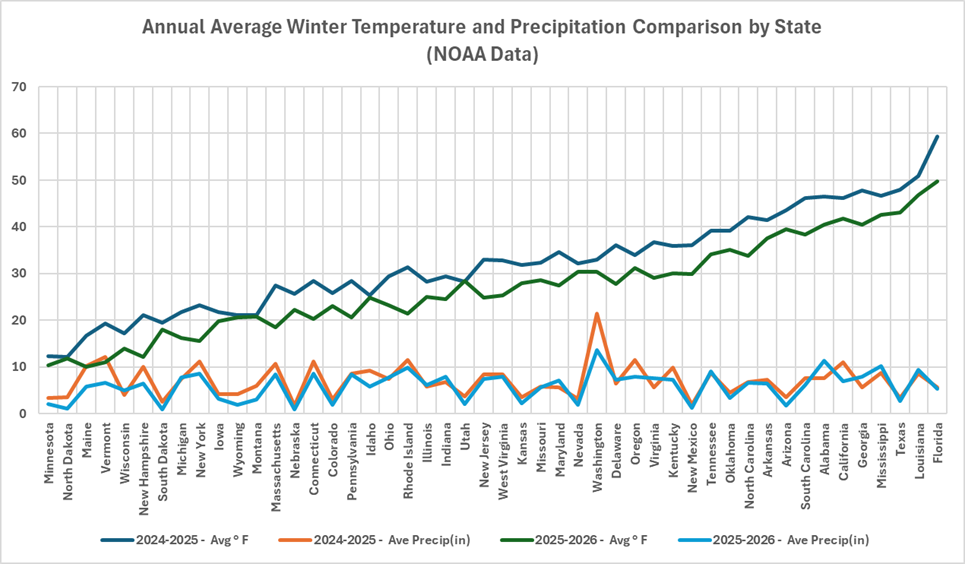
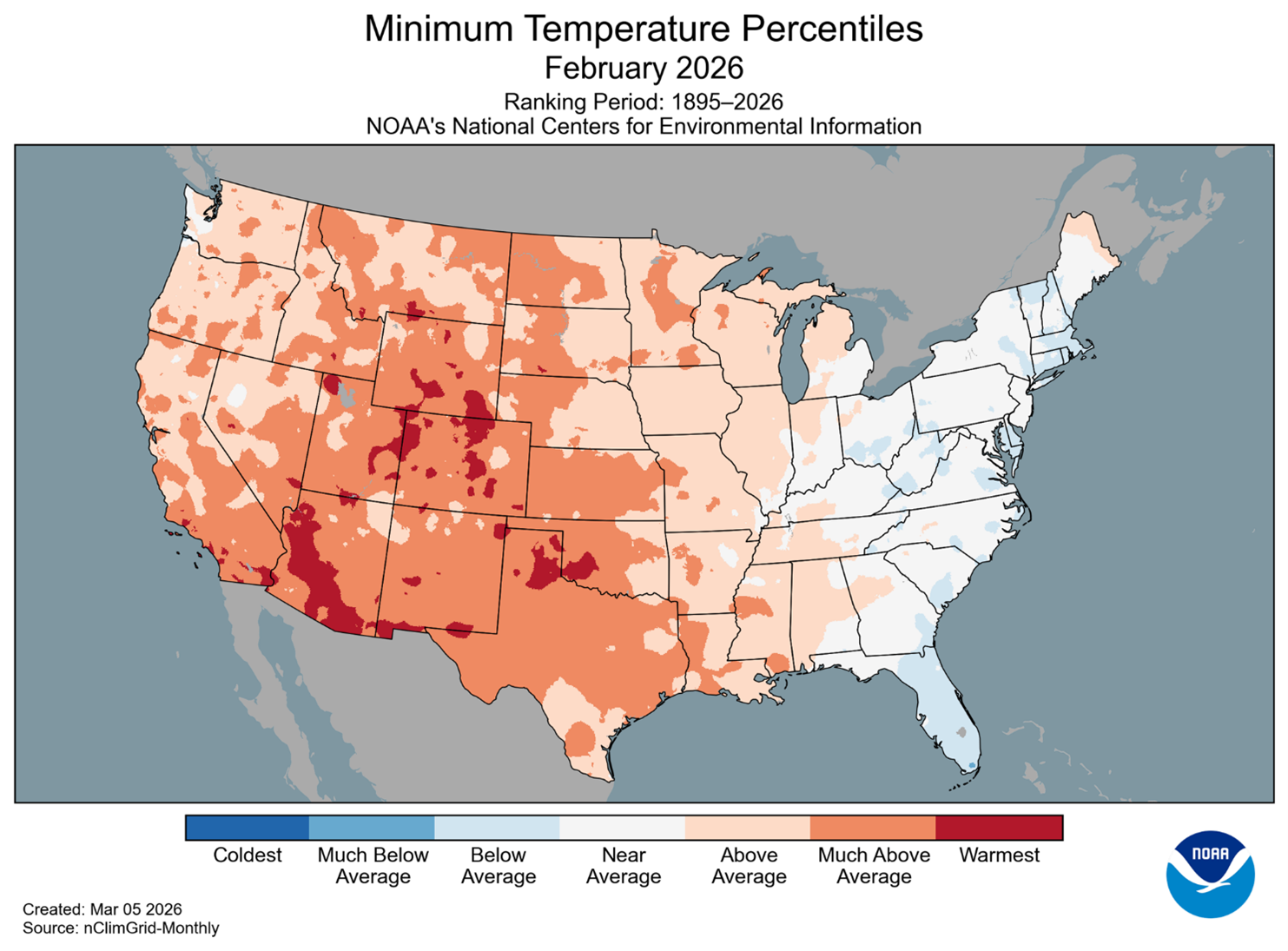
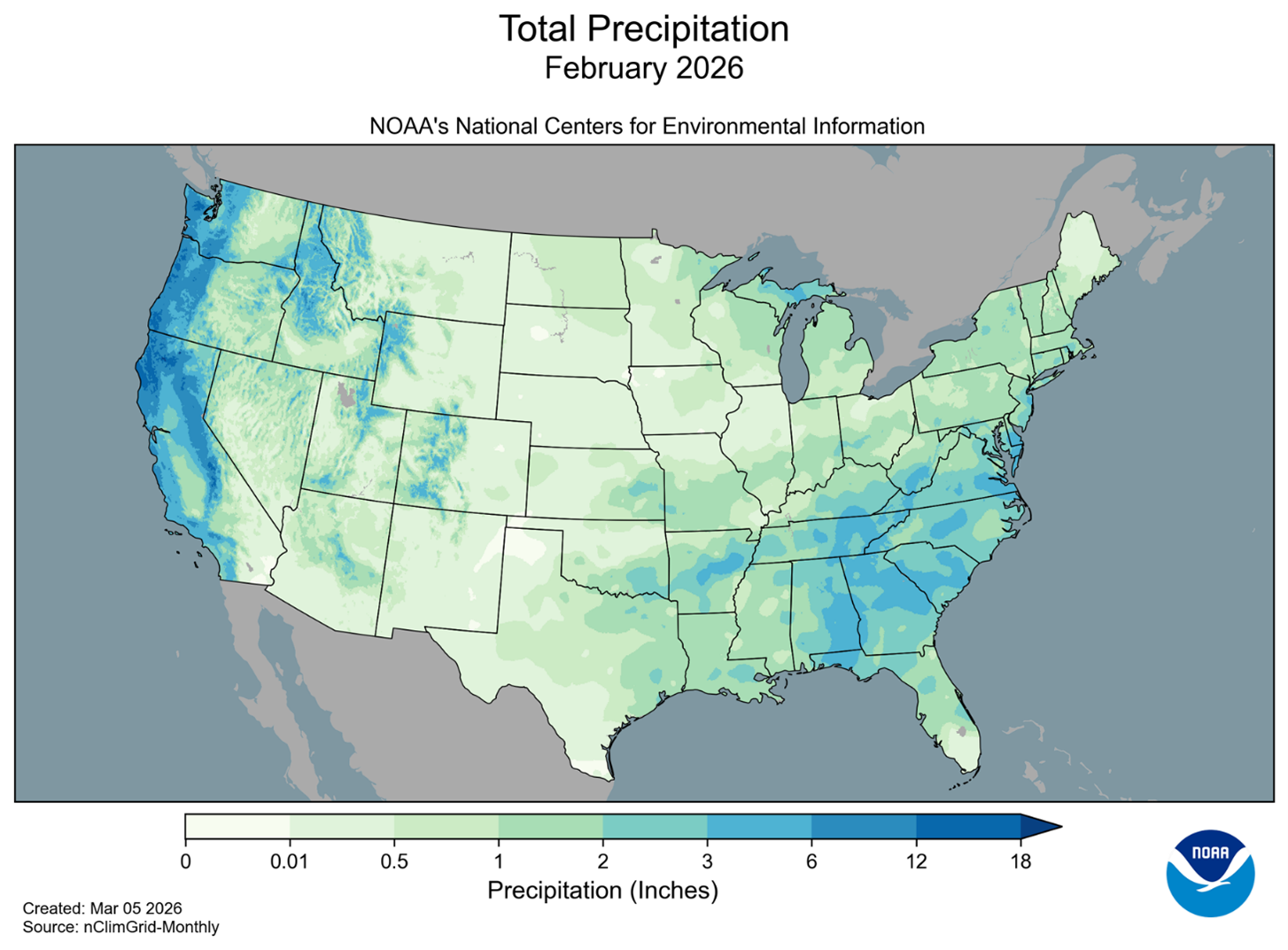
Average temps were warmer across the US this winter along with less than average precipitation. This may have had an impact on honey consumption and early brooding/swarming exposing weaker colonies to adverse conditions.
The first three months of 2026 were the fourth warmest on record, with each successive month surpassing historical averages by a greater margin because of the weak La Nina conditions. El Niño and La Niña are the warm and cool phases of the El Niño-Southern Oscillation (ENSO), a recurring climate pattern in the tropical Pacific that shapes global weather patterns. This change in weather (discussed more later) could have been a significant factor impacting demands on our colonies. We did have a couple weeks of severe cold and snow over the winter, but many have also experienced an earlier than normal start of spring with swarms also coming earlier than expected.
Reasons for Colony Loss
Reasons for colony loss tend to follow similar ideas that one sees reported nationally each year. These range from limited foraging, pesticide exposure, treatment failure, Varroa Mites (viral load), weather conditions, weak colonies, etc. A couple mentioned the likelihood of the colony being queen less going into winter maybe pointing to early winter robbing or late season queen supersedure.
These continue to be the issues called out each year across the US beekeeping industry without much real success in resolving them. It is a tangled web that I hope our wild/feral free-living bees are working through even without the help of the beekeeper. What I think this community is doing is building hives that mimic tree cavities, their natural home, and implementing management practices that allow a natural balance between Varroa and the bees to develop as has been the case for thousands of years between the honey bee and their local pests and pathogens.
Wild Hives hopes you have found this report both helpful and interesting. We thank everyone who participated and look forward to your participation again next year. Remember beekeeping for most of us is a hobby and should be fun. Have fun today!