
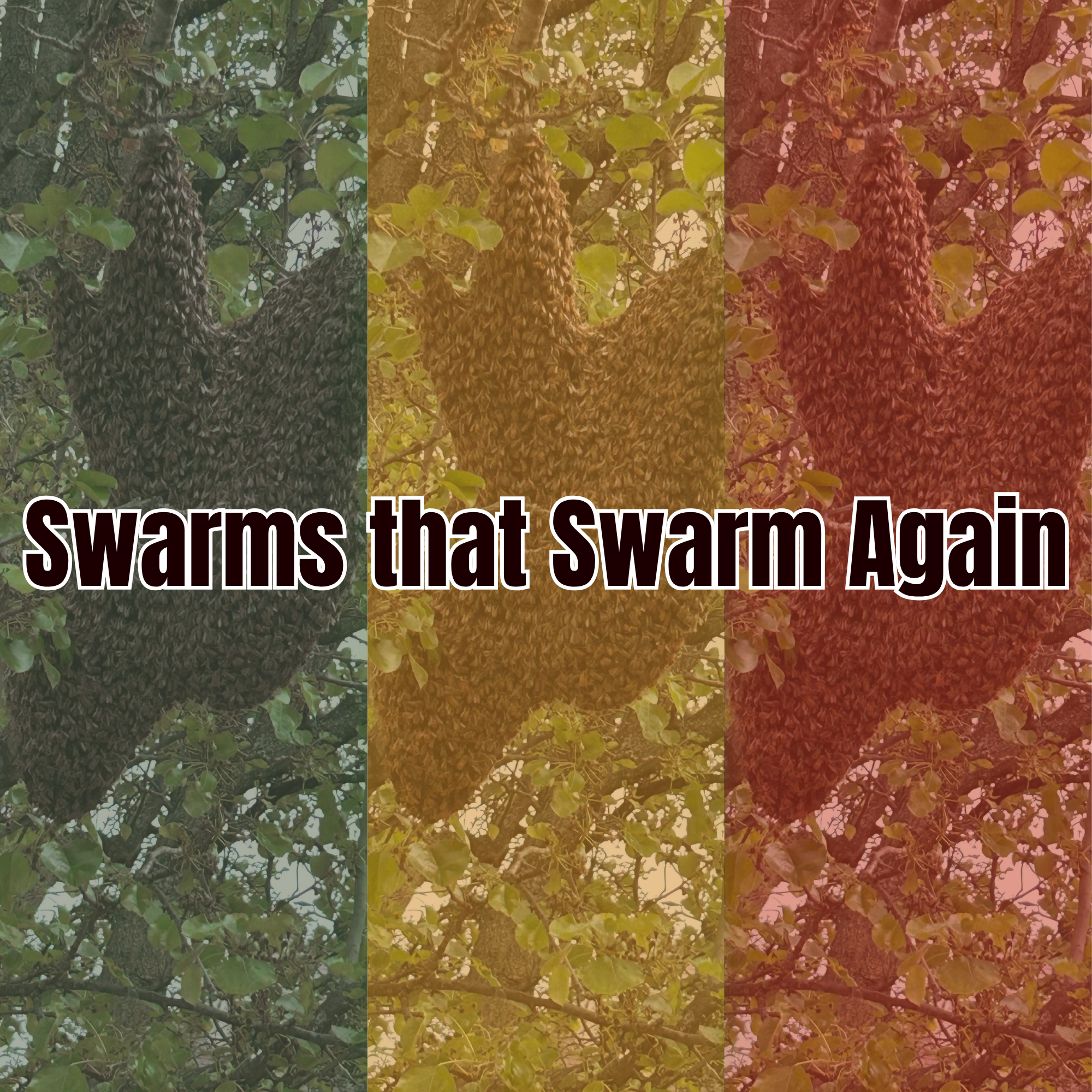
Swarms That Swarm Again
- Posted
In a prior blog I mentioned that not every spring swarms has a mated older queen but may be an “after-swarm” or “cast” containing a virgin queen. This can drastically change how a colony appears and performs in the first few weeks, causing concern and making the beekeeper wonder if they have a queen at all if they haven’t seen her. Admittedly it is often hard to find a virgin queen since she may not have grown to her full size until after mating. Recognizing that a swarm has a virgin and needs time can really help the beekeeper properly time inspections when they make more sense. The colony may need 2-3 weeks and rushing the virgin won’t make anything better. Wait and hope. But what if you have a laying queen? Are you safe?
A quality of swarms with laying queens can also lead to issues and difficulties…swarms can shortly swarm again if the same conditions arise. After all the work of trapping and installation you come back in a week and find half the bees are gone and you have queen cells…ahhhh! Yes, you did everything you’ve been told. You provided space, you added frames, you may have even removed a frame of brood to limit their initial growth. What else did you need to do? Probably nothing but let’s look at one culprit that likely is the answer…the older queen.
First and Second Year Queens
The distinctions between first and second year (“older”) queens are significant in their hormonal profiles, reproductive capacity, and overall colony influence.
Size and Body Mass:
- First-Year Queens: Typically, first year queens are smaller; their body mass often increases as they age.
- Second-Year Queens: Generally larger due to accumulated nutrition and improved health, resulting in increased reproductive capability.
Ovariole Count:
- First-Year Queens: Have a lower count of ovarioles, which can limit egg production.
- Second-Year Queens: Tend to have more developed ovarioles, which correlates with a higher fecundity rate.
Metabolic Health:
Studies indicate that second-year queens have more efficient metabolic processes compared to their first-year counterparts, leading to better health and longer lifespan in the hive.
Genetic Expression:
Research has shown differences in gene expression profiles between queens of different ages, impacting their health and productivity. Second-year queens often show increased expression of genes related to fertility and metabolism.
Colony Management:
- First-Year Queens: Often less experienced in colony management. They may require more support from workers and can display instability in pheromone production.
- Second-Year Queens: Have established behaviors and pheromone profiles, leading to more stable and efficient colony dynamics.
Egg-Laying Rate:
- First-Year Queens: While they can achieve high egg production soon after mating, their overall sustained laying rates may not match those of older queens.
- Second-Year Queens: Tend to maintain higher and more consistent egg-laying rates, crucial for colony survival.
Effect on Colony Health:
The presence of a second-year queen is linked to stronger colony health and productivity, as they are generally better adapted to challenges such as pests and diseases.
Swarming Behavior
First year queens are less likely to swarm, while second year queens have a higher tendency to swarm, especially in the spring. This behavior is influenced by the age of the queen and other factors like colony crowding and nectar flow. Older queens, particularly in their second and third years, are more likely to trigger swarming behavior as they age, typically after their second year. This is because the queen’s pheromones, which help maintain colony cohesion, become less effective, leading to increased chances of swarming when the hive becomes overcrowded.
- Age of the Queen: As queens age, their ability to lay eggs diminishes, which can lead to swarming as the colony seeks to reproduce.
- Colony Overcrowding: Older queens are often in colonies that become overcrowded, prompting the bees to swarm in search of a new home.
- Pheromones: The queen releases pheromones that influence the colony’s behavior. As her reproductive capacity declines, the pheromone levels may change, signaling the need for swarming.
Conclusion
So, as we collect our swarms each spring we must remember we may have a colony with an “older” queen: more developed ovarioles, accumulated nutrition and improved health, efficient metabolic processes, established behaviors and pheromone profiles, and more consistent pace of egg-laying. But this older queen is also aging: diminishing amounts of egg laying, and fluctuating pheromone levels. Just because the swarm has gone through one swarming cycle doesn’t mean they can’t quickly swarm again if faced with the same triggers. In addition, if the older queen is given enough time and comb, laying up any available space, along with abundant foraging resources the signals are still there to launch into another cycle. The beekeeper needs to be diligent in that first month as they would with any overwintered colony approaching spring swarming season.
In swarming…once doesn’t automatically mean done, if it’s still spring.
Referenced Materials
- Evolution and mechanisms of long life and high fertility in queen honey bees
- Queen quality, performance, and winter survival of imported and domestic honey bee queen stocks
- Honey Bee Lifespans are 50% Shorter Today Than They Were 50 Years Ago
- Comparison studies of instrumentally inseminated and naturally mated honey bee queens and factors affecting their performance
- Performance Evaluation of Naturally Mated and Instrumentally Inseminated Honeybee (Apis mellifera L.) Queens in Field Colonies
- Queen Bees and Swarming: Role of the Queen Bee in Swarming
- Queen reproductive state modulates pheromone production and queen-worker interactions in honeybees
- Colony Fissioning In Honey Bees: How Is Swarm Departure Triggered And What Determines Who Leaves?
- Health management strategies of resilient honey bee stock throughout Southern California