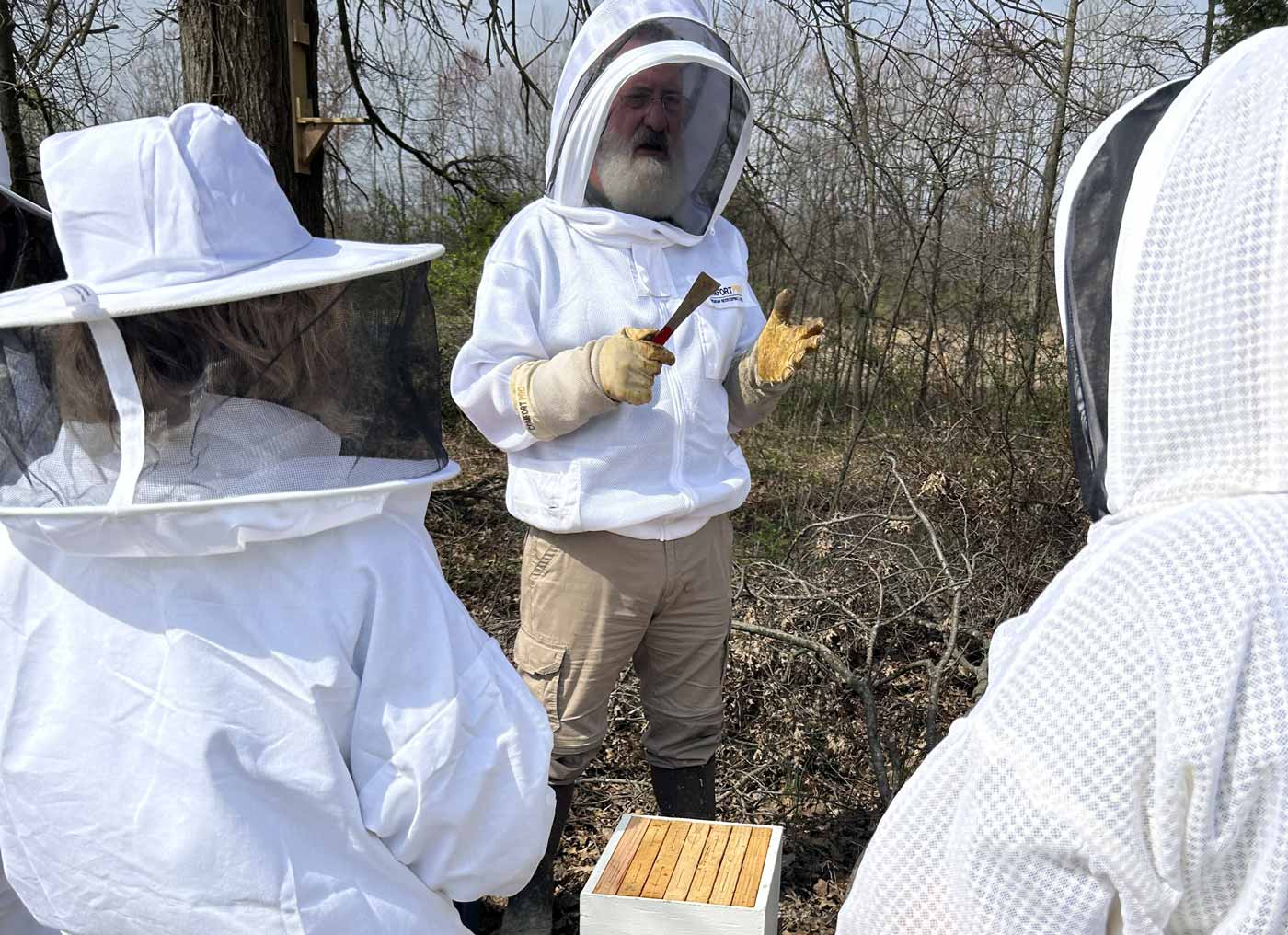
The Varroa Resistance Initiative is intended to support and facilitate a growing community of like-minded beekeepers broadly organized but locally working together to monitor and track for varroa resistant traits within their colonies and local member apiaries. Our hope is that by working together members can ultimately begin sharing locally successful queens, expand the availability of varroa resistant colonies, and improve the genetics of drone congregation areas. Once colonies are identified and we choose to selectively breed only from the colonies and queens that have achieved a demonstratable balance with the Varroa mite we believe that the need for mite treatments will greatly diminish if not be removed all together over time. Success in the initiative will be greatly determined by the diligence of our monitoring, selective breeding, and local support by our community members. Please consider joining this growing community as we work to together for a treatment-free future.
Goals
A simple and easy repeatable process for backyard beekeepers to identify and select for varroa resistance (VR) within their apiary/colonies.
Demonstratable queen and colony performance over multiple seasons.
Data driven tracking and breeding selection.
A broad community of members working locally for local results.
Monthly online sharing of experiences and ideas leading to consistent progress.
Collecting and sharing data quarterly with all community members.
Awareness and support to other beekeepers and clubs to expand the VR Initiative in local areas.
Uploading data quarterly in support of community awareness and process improvement.
Suggested Data Collection Method: Using a sticky bottom board to do mite drop and pupa removal. The sticky board can be used year-round so overwintering monitoring can happen without having to open the hive. Visual inspection of solid bottom boards can also be used during the warmer seasons if the hive or hive style doesn’t provide a screened bottom.
Standard inspections to count brood frames and visually identify uncapping behavior
Also tracking for honey production, brood production, and gentleness.
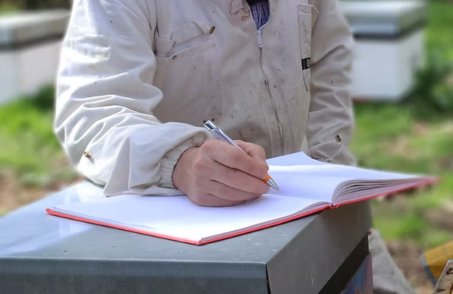
Monitoring must be accurate, repeatable and practical for the beekeeper and community to succeed and learn from the data. Using a simply and easy observational method, though possibly not 100% accurate, will over time be consistent in the method helping the normal backyard beekeeper achieve the three stated goals of monitoring.
At the end of each season, this data will help identify the strongest colonies for queen rearing. Beekeepers who track their data and allow natural resistance to develop will see long-term benefits, with stronger bees and fewer losses. By making informed decisions rather than blindly treating all colonies, we can work toward a future where Varroa is no longer the dominant threat to beekeeping.
Being a member of the VRI Community means becoming an active participant in the effort to identify, understand, and preserve naturally varroa-resistant honeybee genetics. By gathering monthly through Zoom, members can learn from one another, share observations and experiences, and contribute to a growing body of knowledge. The VRI Community brings together beekeepers of all experience levels, hive styles, colony sizes, and geographic regions, allowing us to learn from diverse conditions, accelerate our progress, and work together toward a healthier future for our bees.
What matters most is your willingness to:
Observe your bees regularly
Track what you see
Learn alongside others
Share what you learn
Grow in your understandingof local adaptation
Participate in Monthly Zoom Meetings
Please click the button below and consider joining this exciting community today!
Each month a Zoom meeting will be scheduled allowing community members to discuss their findings, ask questions and gain from the members experiences and excitement. Those that join the VRI Community will be sent registration information for these meetings.
A quarterly community Zoom meeting will also be scheduled and dedicated to sharing the growing set of data and analysis.