
Weather Impacts on Honey Production
- Posted
DISCLAIMER: The blog below is generally created from the research listed in the “Referenced Materials” section. This is not my research. All credit is given to these studies and researchers who are helping beekeepers better understand how we can improve our management practices.
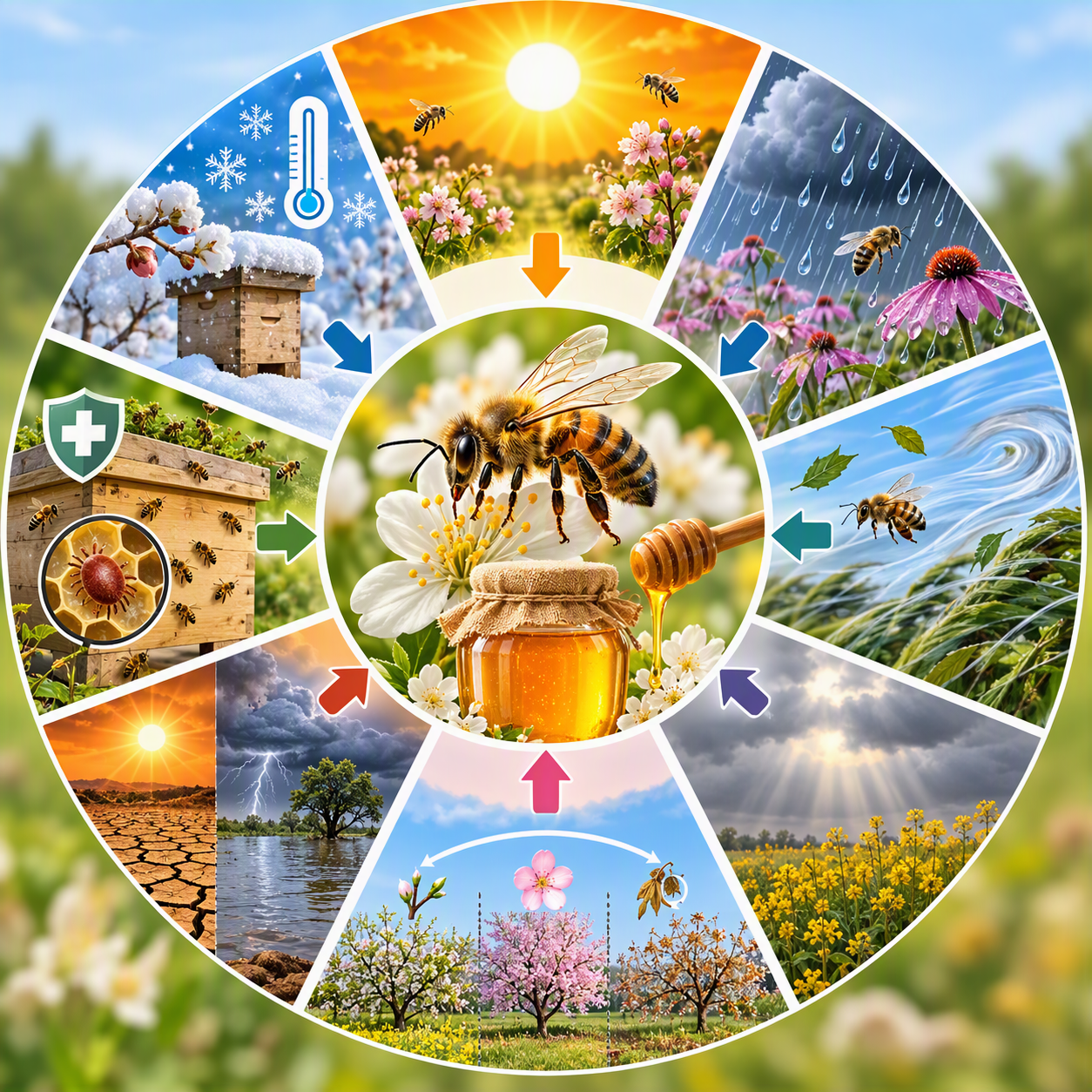
Weather affects honey production mainly through how well bees can forage and how much nectar/pollen is produced and accessible. Key impacts:
Temperature
- Mild, stable warmth helps bees fly more days and forage efficiently, increasing nectar intake.
- Too hot can reduce foraging time (heat stress), speed up nectar evaporation, and shorten flowering/nectar viability.
- Cool or cold snaps can keep foragers in the hive, cutting nectar collection and delaying buildup of colonies.
Rain and humidity
- Rain reduces foraging because bees can’t fly in downpours and nectar can be washed off flowers.
- Frequent wet weather can suppress flowering intensity and lower nectar sugar concentration.
- High humidity can sometimes improve nectar availability, but it also increases mold risk and can complicate hive ventilation.
Wind
- Strong winds make flight harder and raise energy costs, often lowering forager numbers and effective collection rates.
Cloud cover / sunlight
- Overcast conditions can reduce plant photosynthesis and shift bloom/nectar patterns, commonly lowering nectar availability.
- Shorter winter days also affect colony development (slower brood rearing → smaller workforce).
Timing and length of flowering (weather “timing effects”)
- Honey yield peaks when peak bloom aligns with strong colony strength.
- Weather that shifts bloom earlier/later than usual (or causes staggered blooms) can create mismatches, reducing the amount of nectar converted into surplus honey.
Extreme events
- Drought/very dry conditions often reduce nectar flow by stressing plants.
- Heatwaves can shorten flowering duration.
- Late frosts can kill buds/flowers, collapsing the nectar source for that period.
- Flooding can damage flowering plants and reduce access to forage.
Colony health outcomes that feed back into production
- Weather-driven shifts in forage and brood rearing affect colony size.
- Some weather patterns can also increase disease/parasite pressure indirectly (e.g., stress from dearth periods), further reducing honey yield.