
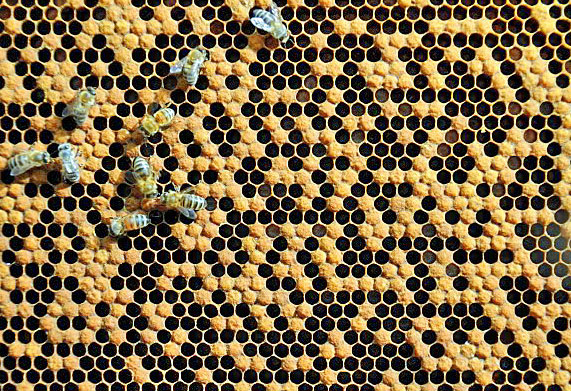
Are your colonies demonstrating symptoms of Inbreeding, Outbreeding Depression, Diploid Drones, or VSH retention failure?
- Posted
DISCLAIMER: The blog below is generally created from the research listed in the “Referenced Materials” section. This is not my research. All credit is given to these studies and researchers who are helping beekeepers better understand how we can improve our management practices.
Inbreeding
An apiary that is isolated from other colonies through geographical or environmental pressures can result in virgin queens breeding with more of her brothers and so she becomes inbred producing diploid drones. In addition, intentional colony isolation when attempting to protect or achieve certain desired traits through repeated use of narrow breeding lines will certainly bring with it additional inbreeding concerns. It’s also important to note that honey bee genetic diversity in the US is currently low, which can lead to genetic vulnerabilities in their ability to adapt to diseases and environmental changes. This low national genetic diversity may be associated with the commercial honey industries’ constant selection for certain honey bee traits such as calmness, low propolisation, and high honey production.
Inbreeding generally reduces genetic diversity, which can lead to:
- Lower colony vitality: Weaker brood rearing, slower colony buildup, and more susceptibility to stress.
- Reduced disease resistance: Colonies may cope worse with pathogens and parasites.
- Reproductive and developmental issues: Lower “quality” offspring can mean weaker workers and less robust queens (in terms of colony performance).
- More inbreeding depression effects: Severity depends on how closely related the parents are and how concentrated the genetics are in the breeding pool.
- In some cases, increased problems with queen performance and colony-to-colony variability: Not always obvious at first, but it can appear over successive generations.
- At the mating level in honey bees: Remember that drones contribute lots of genetics to the queen’s offspring; if many drones are related, the workers in the colony become more genetically similar too. (In practice, beekeepers often see this indirectly as poorer performance, higher losses, or inconsistent queen/barque quality, rather than “measuring inbreeding” directly.)
Why inbreeding can happen in commercial stock
Commercial beekeeping (especially large-scale queen production and overwintering operations) can accidentally create the conditions for related matings:
- Limited mating area (geography): If queen mating happens in a small or isolated region, the queen may mainly mate with drones that are genetically related because there aren’t many unrelated colonies nearby.
- High concentration of managed colonies nearby: Large numbers of apiaries packed into a region can still reduce effective genetic diversity if most colonies share the same breeding sources (for example, if many breeders use the same lines or a few sources of drones trying to retain desired traits).
- Repeated use of the same breeding stock: Queen producers may rely on a small number of high-performing lines year after year (to preserve traits). Without introducing new genetics, relatedness accumulates across generations.
- Restricted drone availability / “drone management”: Commercial operations often manage where and when drones are produced and allowed to fly. If drone production is controlled to a small set of breeder colonies (mating yards), the available drone population for mating can be narrow.
- Selection for specific traits without enough “genetic refresh”: Beekeepers select for traits (gentleness, productivity, disease tolerance, etc.). Strong selection can unintentionally reduce diversity unless they periodically bring in unrelated lines and monitor outcomes.
- Biosecurity/movement practices that reduce genetic mixing: Businesses may restrict colony movements or avoid introducing new genetics (for disease control, brand consistency, or supply stability). That can make the local drone pool less diverse over time.
- Poorly managed timing or mating logistics in queen production: Queen mating can fail or be less diverse if queens are not well matched to conditions that bring them into contact with a broad, unrelated drone population (weather, mating timing windows, location, and drone density all matter).
Commercial breeders often try to reduce inbreeding, but “stopping it” completely is hard because the causes are structural (mating biology + how mating yards work + supply chains), not just a choice you can flip like a switch.
Key structural reasons for inbreeding
- Mating happens in the air, not by choice: A queen mates with multiple drones during a short window. Once she’s on the mating yard, what matters is which drones are available and flying that day. You can’t perfectly control every drone that ends up in her flight.
- Drone supply and location are limited: To get good mating, producers depend on a fixed geographic mating area and a managed set of drone colonies. If that drone pool isn’t large enough or isn’t continuously refreshed with unrelated stock, relatedness accumulates.
- Large-scale “genetic lines” narrow by design: Breeding businesses often maintain consistent lines to reliably produce desired traits. Keeping those lines “pure” and stable can unintentionally reduce overall genetic diversity across generations if new unrelated genetics aren’t introduced often enough.
- Keeping adequate genetic diversity is logistically expensive: To prevent inbreeding, you typically need:
- More unrelated breeder colonies,
- More drone-production capacity,
- More careful mating-yard management,
- More monitoring and record-keeping.
This increases cost and complexity, and many operations run on tight schedules and margins.
- Biosecurity and regulatory realities: Breeders may face restrictions on moving colonies/queens, quarantining stock, and reducing disease-risk introductions. Those constraints can limit how often you can bring in unrelated genetics from elsewhere.
- Trait selection can “outpace” genetic refresh: If you strongly select for traits (productivity, temperament, disease tolerance), you may repeatedly multiply from the best families. Without planned “refresh” with unrelated lines, the breeding pool can converge.
- Measuring and managing inbreeding precisely is not trivial: Even when breeders track pedigrees , the real genetic diversity of the mating pool can vary with:
-
- Drift and mating flight behavior,
- Weather affecting drone participation,
- Seasonal timing differences,
- Unplanned drone contributions.
So even careful programs can still allow some inbreeding to occur.
Bottom line is that commercial breeders can reduce inbreeding by expanding/rotating unrelated breeding stock, increasing drone pool size, and managing mating yards—but “zero inbreeding” is rarely achievable because the mating outcome depends on uncontrolled biology and limited, time-bound drone availability.
Queen Insemination
Queen insemination can reduce inbreeding, but it doesn’t automatically “stop” it because inbreeding is ultimately caused by the genes used to produce offspring—and queen insemination only controls the sperm source, not everything about the mating/genetic network around the operation nor the complete genetic makeup of the queen.
Why insemination often doesn’t stop inbreeding:
- The sperm donors may still be related: With instrumental insemination, the queen is inseminated with semen from selected drones (or drone semen pools). If those drones come from a narrow breeding line or from a small set of breeding colonies, the semen donors are related. That directly creates inbreeding in the queen’s offspring.
- “Pedigree control” doesn’t equal “genetic diversity” control: Even if you track pedigrees, the effective number of males contributing sperm matters. If only a limited group of drone families contribute (even if they look different on paper), the genetic diversity of the offspring can still drop and inbreeding can still occur.
- Operations reuse the same maternal lines for generations: Breeders often retain the best-performing queens/lines and keep using their daughters as future breeding stock. Even if you inseminate with “new” semen, if the maternal side is already related to itself over time, the population can still become inbred across generations.
- There’s often a bottleneck in the program: Queen insemination programs can be constrained by:
- Limited drone production capacity
- Limited ability to collect/store/separate semen from many unrelated lines
- Logistics and cost.
- Random mixing and sampling effects. Even with controlled insemination, you may end up using semen from a sample of available drones (for example, “the best available families this season”). That sampling can accidentally concentrate related genes, especially in years where drone availability or weather restricts options.
- “Inbreeding” can also be reintroduced indirectly: If the queens you inseminate later produce drones that mate with related queens (in the wider environment), you can get renewed inbreeding downstream. (This is more relevant when inseminated queens are used to found colonies that later contribute drones to a mating ecosystem.)
Queen insemination prevents uncontrolled mating, but it only stops inbreeding if the program ensures the queens are inseminated with semen from a sufficiently large, unrelated, continuously refreshed set of drone genotypes, and if the maternal lines are also managed to avoid narrowing over generations.
Outbreeding Depression
Outbreeding depression in honey bees occurs when crosses between genetically distant populations result in reduced fitness of the offspring. This can happen due to factors like loss of local adaptations or genetic incompatibilities.
Commercial breeding programs may import bees to increase genetic diversity, but importing can sometimes create outbreeding depression—reduced fitness in the offspring—because the “new” genetics aren’t well matched to the existing breeding background.
Why importing (even for backyard beekeepers) can cause outbreeding depression:
- Co-adapted gene complexes break apart: In well-adapted lines, certain combinations of genes work well together (across immunity, development timing, behavior, thermoregulation, etc.). Introducing “foreign” genetics can disrupt these combinations, reducing survival, brood success, or colony performance.
- Different local adaptation: Imported bees may be adapted to the environment they came from (climate, forage timing, pests/pathogens). When crossed with local stock, offspring can be less well adapted to the local conditions, lowering performance.
- Loss of compatibility in queen–worker–drone interactions: Honey bee colonies function as integrated systems (maternal genetics affect workers; colony-level effects matter). Crossing distant lines can reduce harmony between castes and colony traits.
- Small founding numbers / founder effects: If the program imports only a few colonies or a narrow set of individuals, the benefit (more diversity) can be offset by another bottleneck. The imported group may also carry uncommon genetic variants that don’t fit well.
- Not enough backcrossing or phased introgression: If breeders abruptly switch to lots of imported genetics, incompatibilities may not get “sorted out” by selection. Gradual introgression is often less risky than a sudden wholesale replacement.
- Hidden disease/pathogen and selection-history differences: Different pathogen pressures and immune-system histories can make hybrids more vulnerable—especially if the imported stock hasn’t co-evolved with the local parasite community (or vice versa).
Importing can prevent inbreeding, but it can also reduce fitness if the imported bees are genetically and ecologically too different from the existing line—i.e., hybrids may be less able to thrive because useful gene combinations and local adaptations don’t match well.
Diploid Drones
Diploid drone honey bees are a rare type of male bee that develop from fertilized eggs, contrasting with typical drones, which are haploid and arise from unfertilized eggs. This unique reproductive process can lead to significant genetic implications within a hive. They are usually produced when something goes wrong with the queen’s fertility or the colony’s sex determination.
Characteristics of Diploid Drones:
- Genetic Makeup: Diploid drones possess two sets of chromosomes, one from each parent, making them genetically different from haploid drones, which have only one set from the queen.
- Occurrence: These drones are infrequently found in colonies, often resulting from inbreeding. Their presence can indicate a lack of genetic diversity within the hive.
- Recognition and Elimination: Worker bees can identify diploid drones due to their genetic composition. They often remove these drones from the hive, as they may not contribute effectively to reproduction.
What are the genetic implications of diploid drone honey bees in bee populations?
In honey bees, drone males are haploid (develop from unfertilized eggs), with 16 chromosomes coming from the queen, so each drone’s genetic makeup is not an exact copy of hers. When a drone’s sperm fertilizes a queen’s egg, the resulting diploid females share 100% of the father’s genes and 50% (on average) of the mother’s genes, meaning full sister workers are about 75% related overall.
How does inbreeding contribute to the occurrence of diploid drone honey bees?
Inbreeding in honey bees can lead to the production of diploid drones when a queen lays fertilized eggs with identical copies of a gene from both the queen and the drone. This results in male workers that do not survive, causing gaps in the brood pattern.
Reasons for the Destruction of Diploid Drones
- Genetic Liability: Diploid drones are often viewed as a genetic liability within honeybee colonies. Their presence can lead to inbreeding, which negatively affects the overall health and viability of the colony.
- Cannibalism Substance: Diploid drones produce a specific pheromone known as “cannibalism substance.” This pheromone serves as a signal to worker bees, prompting them to eliminate these drones from the colony.
- Brood Pattern Issues: The presence of diploid drones can result in poor brood patterns. When a queen mates with a diploid drone, it can lead to a spotty brood pattern, characterized by numerous empty cells on a brood frame. Worker bees tend to remove and consume the inbred brood, recycling the protein for the colony.
Visible effects on comb and brood
- Brood becomes patchy or scattered, with irregular emergence patterns.
- Diploid drone brood is often irregularly capped (can look “messy” compared with normal drone brood).
- You may see drone-sized cells containing dead/abnormal brood stages, or drone brood that fails to develop properly.
- Multiple cell types may be affected because the underlying problem can affect the whole brood cycle (depending on the cause)
Adult/behavioral signs you may notice
- Unusually high number of drones may not appear (because diploid drones are nonviable in many cases), but the colony may show general brood dysfunction rather than a healthy drone force.
- Lower overall colony vigor: reduced worker population growth is common, so the colony may not build as expected.
- Delayed or poor buildup in spring, especially if the issue persists across brood cycles.
Varroa Sensitive Hygiene (VSH) Retention Failure
Here are the main reasons VSH can “dilute” in daughter queens:
- VSH is polygenic (many genes): VSH (Varroa Sensitive Hygiene) depends on multiple genes and traits (behavior + physiology). When you breed, those allele combinations don’t get passed on as a perfectly matched set every generation.
- Recombination reshuffles the trait: Even if the mother queen is very VSH, her daughter queens are mosaics of her genes plus drone genes. Crossing breaks up “good” combinations that produced strong VSH in the mother.
- Drone genetics can dilute VSH: Queen mating uses drones, and drones may not all carry the same VSH-associated genetics. If you’re sourcing drones from a breeding population with mixed VSH levels, daughter queens will often regress toward the population average.
- Selection pressure isn’t always consistent: A queen’s daughters are “selected” for VSH through colony performance over time. If the environment, mite pressure, or testing method changes, the next generation may not express VSH traits as strongly—even if the genetics are partially there.
- Expression is affected by environment and colony context: Hygienic behavior depends on colony conditions (brood availability, nutrition, population strength, temperature, beekeeping practices). A daughter queen with the same underlying genetics may show weaker VSH if reared/kept under different conditions.
- Measurement/testing noise: If VSH is assessed using colony behavior tests, there’s natural variation from day to day and between colonies. That makes it easy for breeders to unintentionally select queens that are “good enough” rather than truly top VSH, letting the trait drift down.
Retaining VSH is difficult because breeding involves (a) genetic reshuffling, (b) variable drone genetics, and (c) imperfect, context-dependent expression—so daughters tend to drift unless the program uses tight selection + controlled mating and repeatedly screens the performance of the next generation.
Referenced Materials
- Diploid drones are a result of inbreeding
- Diploid Drone Syndrome in Bees
- Honey Bee Genetics Basics
- What happens to diploid drone larvae in honeybee colony?
- DNA Research Finds Low Genetic Diversity Among U.S. Honey Bees
- Managed Bees Impact on Wild Bees
- Outbreeding depression
- The Genetic Interpretation of Inbreeding Depression and Outbreeding Depression
- Evaluating inbreeding and assessing the risk of outbreeding depression in genetic rescue using whole-genome sequence data
- From heterosis to outbreeding depression: genotype-by-environment interaction shifts hybrid fitness in opposite directions
- Is outbreeding depression something we should be considering?
- Honeybees and colony collapse disorder: understanding key drivers and economic implications
- Inbreeding and Outbreeding Depression in Wild and Captive Insect Populations